

Your Hearing Questions Answered
Find answers to the most common questions about hearing aids, hearing loss, and our specialized services.
What are the signs of hearing loss?
Common signs include difficulty understanding conversations, frequently asking others to repeat themselves, and needing to turn up the volume on electronic devices.
How do hearing aids work?
Hearing aids amplify sound through a microphone, processor, and speaker, helping you hear more clearly in various environments.
What services does Family Hearing Center offer?
We provide hearing assessments, hearing aid fittings, tinnitus management, and ongoing support to ensure optimal hearing health. Learn more here.
How often should I have my hearing checked?
We recommend annual hearing evaluations, especially if you are over 50 or have been exposed to loud noises regularly.
Can hearing aids help with tinnitus?
Yes, many modern hearing aids come with features that can help manage tinnitus by masking the ringing sound with therapeutic noise.
What should I expect during a hearing test?
Our comprehensive hearing tests include a series of evaluations to determine your hearing ability and identify any issues that need addressing.
What is a Hearing Instrument Specialist?
A hearing instrument specialist (HIS) is a professional trained specifically in the fitting of the hearing aids and assistive listening devices. The specialist may also be an audiologist; however, it is not required. A hearing instrument specialist has extensive supervised on-the-job training prior to being licensed by the state. The hearing instrument specialist is required to fulfill annual continuing education requirements.
How Do I Know if I Have Hearing Loss?
If you think you or a loved one may have hearing loss, you are not alone. Often times people notice signs of hearing loss but do not take the steps to get it treated right away. Typically, it takes people an average of seven years to seek treatment. You may have hearing loss if:
- You hear people speaking but you have to strain to understand their words.
- You frequently ask people to repeat what they said.
- You don’t laugh at jokes because you miss too much of the story or the punch line.
- You frequently complain that people mumble.
- You need to ask others about the details of a meeting you just attended.
- You play the TV or radio louder than your friends, spouse and relatives.
- You cannot hear the doorbell or the telephone.
- You find that looking at people when they speak to you makes it easier to understand.
- You miss environmental sounds such as birds or leaves blowing.
- You find yourself avoiding certain restaurants because they are too noisy, or certain people, because you cannot understand them.
- You hear a ringing sound in your ears, especially when it is quiet.
What Causes Hearing Loss?
Hearing loss can be due to several factors such as the aging process, exposure to loud noise, medications, infections, head or ear trauma, congenital (birth) or genetic factors, diseases, as well as a number of other causes. Recent data shows that about 20 percent of adults in the United States (48 million) report some degree of hearing loss. Hearing loss often occurs gradually throughout a lifetime.
How is Hearing Loss Diagnosed?
If you have any symptoms of hearing loss, you should see a hearing instrument specialist to have a formal hearing evaluation. This hearing test allows the hearing instrument specialist to determine the type, nature and degree of your hearing loss and provide an indication as to how successful of a candidate you will be for hearing aids.
The hearing evaluation will also include a thorough case history and a visual inspection of the ear canal and eardrum. The results of the evaluation can be useful to a physician, if the hearing instrument specialist believes your hearing loss may benefit from medical intervention.
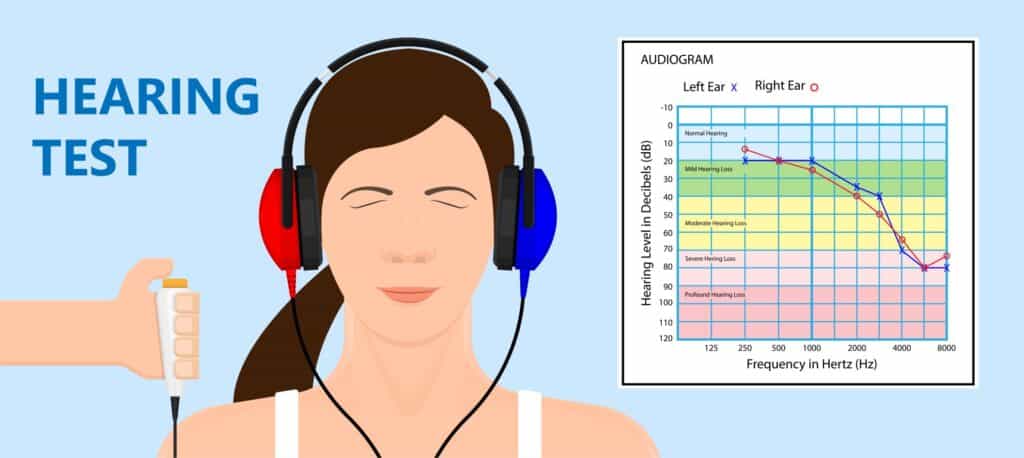
Results of the hearing evaluation are plotted on a graph called an audiogram. The audiogram provides a visual view of your hearing test results across various pitches or frequencies, especially the ones necessary for understanding speech.
The audiogram and results from your speech understanding tests are used to create a prescription by which hearing aids are programmed, if necessary.
What Are There Different Degrees of Hearing Loss?
After you undergo a hearing evaluation, the results are plotted on a chart called an audiogram. Loudness is plotted from top to bottom. The top of the graph is very quiet and the bottom of the graph is very loud. Frequency, or pitch, from low to high, is plotted from left to right. Hearing level (HL) is measured in decibels (dB) and is described in general categories, not by percentages. The general hearing loss categories used by most hearing professionals are as follows:
- Normal hearing (0 to 25 dB HL)
- Mild hearing loss (26 to 40 dB HL)
- Moderate hearing loss (41 to 70 dB HL)
- Severe hearing loss (71 to 90 dB HL)
- Profound hearing loss (greater than 91 dB HL)
What are the Different Types of Hearing Loss?
There are four types of hearing loss:
1. Sensorineural hearing loss: When the problem is in the inner ear, a sensorineural hearing loss is the result. This commonly occurs from damage to the small hair cells, or nerve fibers, in the organ of hearing. Sensorineural hearing loss is the most common type of hearing loss and accounts for more than 90 percent of hearing loss in all hearing aid wearers. The most common causes of this hearing loss are age-related changes and noise exposure. Loss may also result from disturbance of inner ear circulation, increased inner ear fluid pressure, or from disturbances of nerve transmission. There are many excellent options for the patient with sensorineural hearing loss.
2. Conductive hearing loss: When there is a problem in the external or middle ear, a conductive hearing impairment occurs. Conductive hearing loss occurs when sound is not conducted efficiently through the ear canal, eardrum, or tiny bones of the middle ear, resulting in a reduction of the loudness of sound that is heard. Conductive losses may result from earwax blocking the ear canal, fluid in the middle ear, middle ear infection, obstruction of the ear canal, perforation (hole) in the eardrum membrane, or disease of any of the three middle ear bones. All conductive hearing losses should be evaluated by a physician to explore medical and surgical options.
3. Mixed hearing loss – When there are problems in the middle and inner ear, a mixed hearing impairment is the result (i.e. conductive and a sensorineural impairment).
4. Auditory neuropathy spectrum disorder (ANSD): The least common hearing impairment is ANSD. This type of loss requires more in-depth diagnostic testing, including a hearing evaluation with pure tones, otoacoustic emissions (OAEs) and auditory brainstem response (ABR) testing. In this type of hearing loss, the nerve fibers in the organ of hearing typically appear to be functioning well, but a breakdown of the information occurs along the pathway to the brain. A person may still have normal hearing to sounds, but the sound is not encoded properly the brain. This type of hearing disorder is diagnosed more often in children, due in part to newborn hearing screenings that use automated ABR equipment and routine speech screenings by pediatricians and school systems, but can be present in adults as well.
About Family Hearing Center
Family Hearing Center is dedicated to improving the lives of our patients through exceptional hearing care. With locations in Barrington, Littleton, Laconia, Ossipee, and Plymouth, we offer state-of-the-art diagnostic services and personalized treatment plans. Our team of experienced specialists is committed to providing compassionate care and utilizing the latest technology to enhance your hearing health. We believe in treating our patients like family, ensuring that each individual receives the attention and support they deserve. Our mission is to help you enjoy the sounds of life to the fullest.
Our Services
Comprehensive Hearing Tests
Our thorough hearing evaluations are designed to assess your auditory health and identify any hearing loss. Our specialists use advanced technology to ensure accurate results and tailor solutions to your needs.
Personalized Hearing Aid Fittings
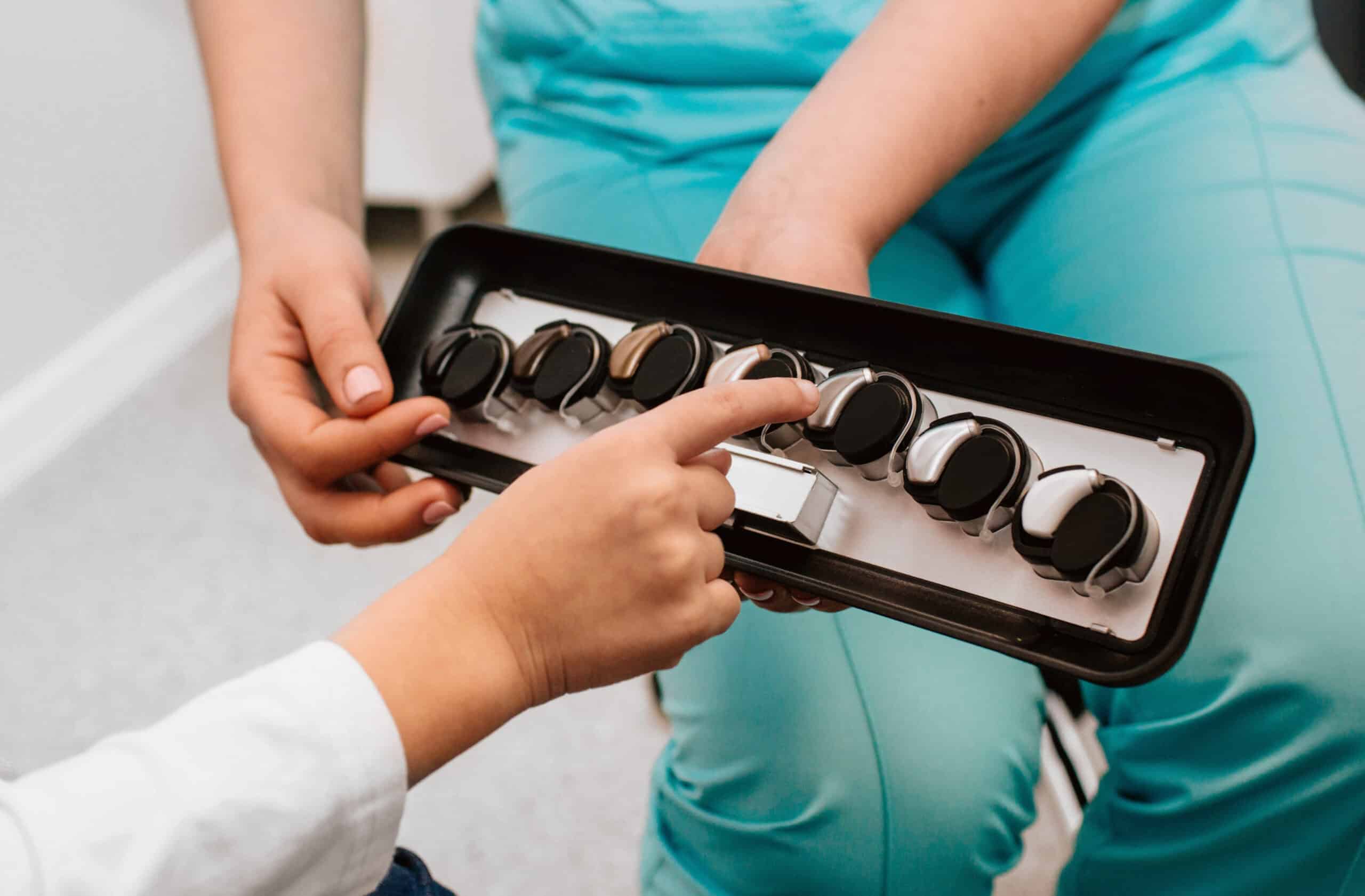
We provide custom hearing aid fittings to ensure maximum comfort and effectiveness. Our team will guide you through the selection process to find the perfect device for your lifestyle.
What Our Patients Say
“The team at Family Hearing Center changed my life. Their personalized approach and attention to detail made all the difference. I can now enjoy conversations with my grandchildren without missing a word!”
“I was nervous about getting hearing aids, but the staff made me feel at ease. They explained everything clearly and helped me choose the right aids. My quality of life has improved tremendously.”
“Thanks to Family Hearing Center, I can hear the birds sing again. Their expertise and care are unmatched. I highly recommend them to anyone struggling with hearing issues.”
“The consultation was thorough and informative. I felt heard and understood. The hearing aids I received have made a huge difference in my daily interactions.”
“I appreciate the patience and professionalism of the staff. They took the time to answer all my questions and ensure I was comfortable with my new hearing aids.”